


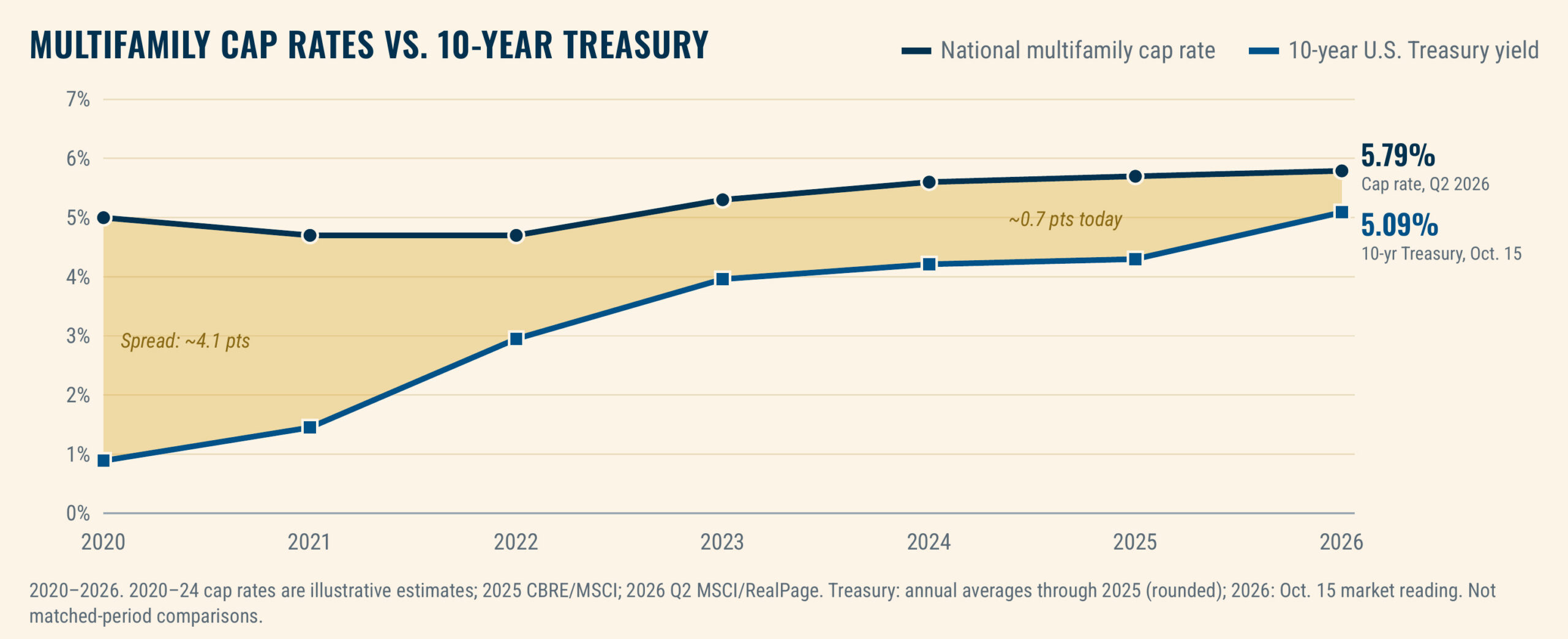
We have not seen interest rates at these levels in more than 20 years. The 10-year U.S. Treasury yield, a key benchmark for commercial real estate financing, has climbed above 5%, reaching approximately 5.3% in recent weeks.
Having started my real estate career in the 1980s, I remember a very different interest rate environment. Treasury yields were in the double digits, and mortgage rates approached 17%. Imagine trying to sell real estate under those conditions! Fortunately, we are a long way from those extremes. Nevertheless, the rise in interest rates that began in 2022 has had a profound impact on multifamily capitalization rates, property valuations, financing costs, and even operating expenses. From their peak in 1981 to their historic lows in 2020, interest rates followed a downward trajectory for nearly 40 years. Strong investor demand, readily available financing, and expectations of continued appreciation drove multifamily cap rates to historically low levels.
That environment has changed.
Over the past four years, multifamily cap rates have gradually moved upward. While the increase has not been nearly as dramatic as the rise in interest rates, the direction is unmistakable. For multifamily owners, particularly those approaching a loan maturity or refinancing, the consequences can be significant. Higher borrowing costs mean increased debt service, while rising cap rates pressure property values. Appraisals are often coming in below expectations, lenders are more cautious, and older properties face particularly close scrutiny. The combination of higher financing costs, more conservative lending standards, and pressure on property values presents challenges that owners cannot afford to ignore. Whether you are approaching a refinance, considering a sale, or simply planning to hold your investment, there are several proactive steps worth considering.
Six Strategies for Multifamily Property Owners
1. Start with Your Biggest Expenses
Shop insurance competitively and judge your property manager on results, not fee alone. A good manager may cost more initially but can generate substantial savings over time. Then trim smaller items, such as contractors and water-intensive landscaping (consider low-maintenance xeriscaping).
2. Maximize Rental Income
Stay current with market rents and adjust as units turn over. Implement timely rent increases where market conditions and law allow, and evaluate utility reimbursement programs. The payoff is larger than it looks.
3. Keep Your Property in Excellent Condition
Do not allow deferred maintenance to accumulate. Address repairs promptly, maintain major building systems, and plan ahead for capital improvements. Well-maintained properties are more attractive to tenants, lenders, appraisers, and buyers, and deferred maintenance gets particularly costly when refinancing or selling.
4. Explore All Refinancing Options Well in Advance
If your loan is approaching maturity, begin evaluating your options early, since lending terms and loan programs can vary considerably. An experienced commercial mortgage broker can be an invaluable resource, and our Compass Commercial Multifamily Team can also help you evaluate alternatives and connect with financing resources.
5. Consider Selling Rather Than Refinancing
Refinancing is not always the best financial decision. Depending on your equity, property condition, capital needs, and long-term objectives, a sale may be a more attractive alternative. Understanding your property’s current market value is an important first step.
6. Consider Seller Financing as an Exit
For owners with sufficient equity, seller financing can expand the pool of qualified buyers, facilitate a transaction, and potentially provide an attractive income stream. Properly structured seller financing may also offer tax-planning advantages, depending on individual circumstances.